
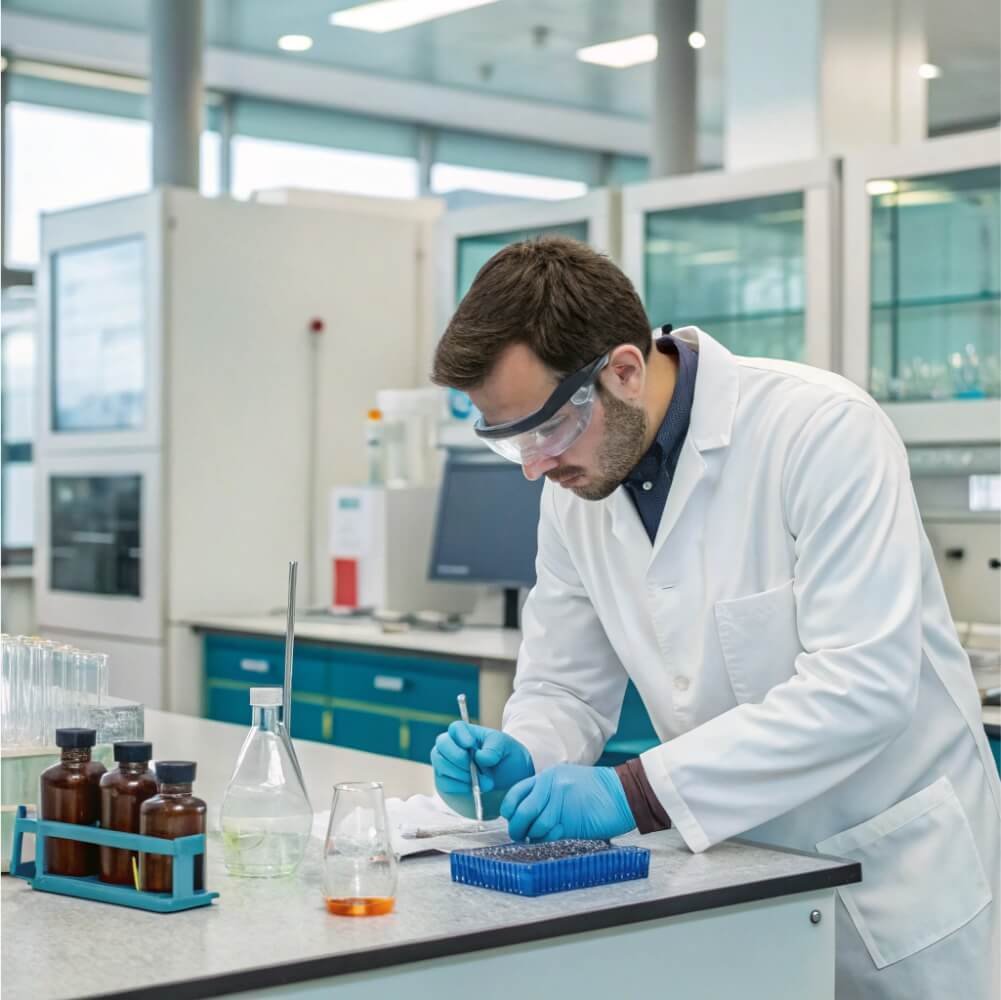
Inorganic Chemicals
What are Inorganic Chemicals?
Inorganic chemicals are substances that are generally not carbon-based. They are a fundamental class of compounds that include acids, bases, salts, metals, minerals, and gases. While organic chemistry focuses on compounds containing carbon-hydrogen bonds, inorganic chemistry covers all other elements on the periodic table and their compounds. This category is vast, with many inorganic compounds occurring naturally as minerals in the Earth’s crust, while others are synthetically produced on a massive industrial scale.
Uses of Inorganic Chemicals.
Inorganic chemicals are the workhorses of the chemical industry and are essential to a wide range of applications that power modern life. Their uses include:
- Agriculture: Inorganic chemicals like ammonia () are foundational for producing nitrogen-based fertilizers that are crucial for global food production. Phosphates are also used to make fertilizers.
- Water Treatment: Chlorine () and other inorganic compounds are used to disinfect drinking water and treat wastewater, ensuring public health and safety.
- Manufacturing: They are used as raw materials in the production of countless goods, from paper and detergents (using sodium hydroxide, ) to plastics and paints (using various pigments and fillers).
- Construction: Inorganic chemicals are key components of building materials such as cement, glass, and ceramics.
- Metallurgy: Acids and other inorganic compounds are used in the extraction, purification, and processing of metals from their ores.
- Electronics: High-purity inorganic materials like silicon () are the basis for the semiconductor industry, which powers all modern electronics
Best Products of Inorganic Chemicals.
The “best” inorganic chemicals are those produced in the highest volumes due to their critical role in various industrial processes. These compounds are a good indicator of a country’s industrial strength. Some of the most important inorganic chemicals are:
- Sulfuric Acid (): Often called the “king of chemicals,” it is the most-produced industrial chemical in the world. Its primary use is in the production of fertilizers, but it is also used in petroleum refining, metal processing, and the manufacture of detergents and car batteries.
- Ammonia (): Produced primarily via the Haber-Bosch process, ammonia is a major component of nitrogenous fertilizers, making it vital for agriculture. It is also used in the production of plastics, synthetic fibers, and explosives.
- Chlorine (): A highly reactive halogen gas, chlorine is widely used for water purification, as a bleaching agent in the paper and textile industries, and as a key raw material for producing PVC plastics and other chemicals.
- Sodium Hydroxide (): Also known as caustic soda, this strong base is used in a wide range of industries, including paper and pulp, textiles, soap and detergent manufacturing, and aluminum production.
- Nitrogen (): While it makes up 78% of the atmosphere, industrial nitrogen is used as an inert gas to prevent oxidation in food packaging, to create a protective atmosphere in electronics manufacturing, and as a cryogenic fluid for freezing and refrigeration.
Magma Nextrade is a global import-export company that operates across various industries, including industrial chemicals. The company focuses on connecting businesses with international markets by providing a comprehensive suite of services. These services include product sourcing, quality inspection, logistics management, and ensuring compliance with international trade regulations. Magma Nextrade’s portfolio includes the export of industrial and specialty chemicals, with inorganic chemicals being a key part of their offerings. The company leverages its extensive global network to supply and export high-quality, reliable chemical products to clients worldwide, helping them to navigate the complexities of international trade.



Reviews
There are no reviews yet.